
Exclusion zone planning before the plant arrives.
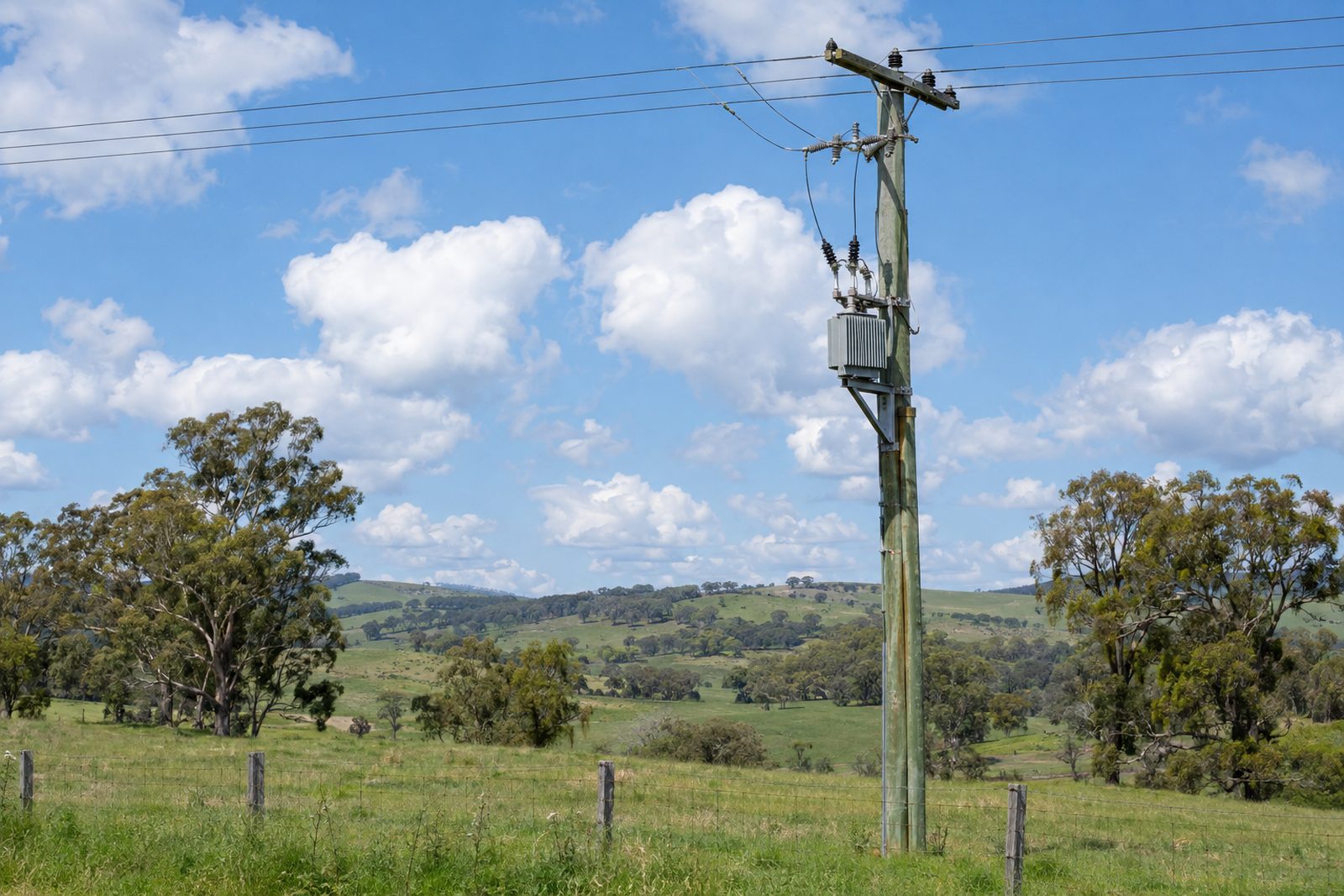
The cheapest time to deal with a powerline or a buried service is before work starts. We walk the site, mark up the lines and services, work out where plant will need to go and set out the spotter plan your SWMS needs.
From the site walk to the spotter plan.
We start with the plans and the network operator's requirements, then confirm what is actually on the ground.
- Site walk to identify overhead lines, poles, stays and underground service routes
- Mark-up of exclusion and no go zones for each line type and voltage
- Spotter numbers, positions and shift plan for the program
- Input to SWMS, network operator applications and toolbox talks
A plan the crew can follow.
Plans are written to drop into your SWMS and site briefings.
- Site map with lines, services and zones marked
- Line types and voltages where confirmed by the asset owner
- Recommended controls and spotter plan
- Photographs of key hazards
How pricing works
Quotes are itemised by shift rate, travel, vehicle and equipment, and reporting. Site walks and plans are usually a fixed fee once the scope is clear.
Send the site location, the work program, the plant on site, your preferred dates and any permit or network operator conditions. We confirm scope, availability and price before work is booked.
Working with the network operator
Only the asset owner can confirm a line's voltage, approve work inside its exclusion zone, or arrange isolation, relocation or tiger tails. We help you prepare the information they ask for and build their conditions into the plan.
Frequently asked questions
Can you tell me the voltage of a line?
We can identify the likely line type, but the asset owner confirms the voltage. Where it is not confirmed, the plan uses the larger clearance.
Do you lodge network operator applications?
We prepare the supporting information and can help with the application. The approval itself comes from the network operator.
Is this useful for small jobs?
Yes. A short site walk before a one-day job is often what stops a dropped tipper body or a crane boom touching a line.